
Domain 02
Social Media
Network effects lock users in; the visible audience turns every exchange into a public game; attention is a commons.
The lock-in is a stag hunt at scale, which is the useful diagnosis because it says the lever is assurance rather than persuasion — people leave in groups or not at all. The performance layer converts arguments into chicken: with an audience present, backing down carries a reputational cost that did not exist in the private version, so disputes that would have ended in a minute run for days. And the attention commons explains escalation of tone without needing anybody to be malicious: each ratchet is a proportionate response to the last.
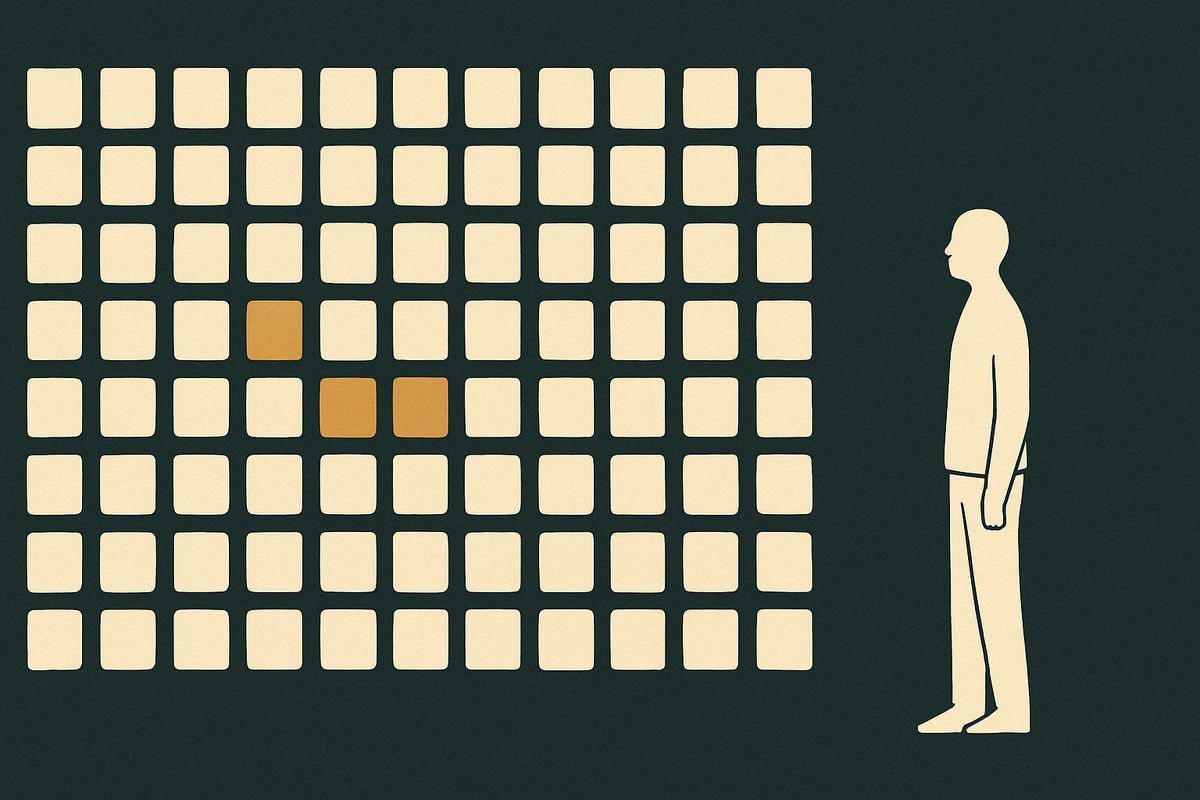
The audience — counted as spectators when they are the decisive player. Also the people who already left, whose absence shapes what the place is now and who are invisible precisely because they are gone. And the recommender system itself, which has a strategy and is not a neutral pipe.
What to look for
- Would this argument have ended in a minute if nobody were watching?
- Who benefits from you being unable to leave, and what would let you?
- Is each escalation a proportionate response to the last? That is the tell.
- What is actually being optimised, and what was it meant to stand in for?
The shapes that run this field
Network Effects and Tipping
A good whose value to each user rises with the number of users, producing self-reinforcing adoption and lock-in.
Shape 02Chicken
Two equilibria, both lopsided: one side concedes and the other does not. No dominant move.
Shape 06The Commons
A rival but non-excludable resource: each user's extraction imposes a cost spread across all users.
Shape 16Escalation
A sequence in which each response justifies the next, and no step is individually unreasonable.
Shape 12Costly Signalling
A costly, observable action that reveals private information because faking it would not pay.
In practice
Chicken
A dispute both parties want to end, that neither can end, because ending it in public is conceding.
The Commons
Everyone posting a little louder to be seen at all, and the whole feed getting louder for nobody's benefit.
Network Effects and Tipping
Staying on a platform you dislike because everyone you know is there and none of you can move alone.