
Shape 02 · also called Hawk–Dove / brinkmanship
Chicken
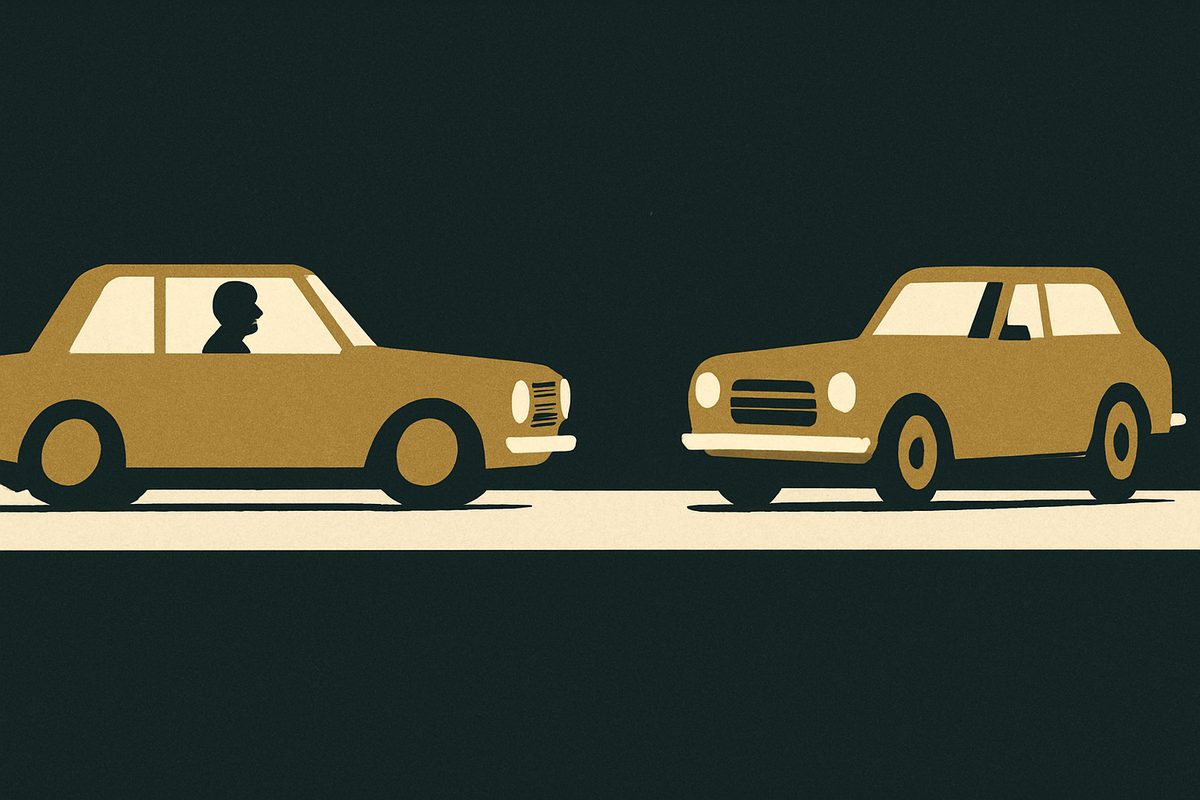
Two equilibria, both lopsided: one side concedes and the other does not. No dominant move.
The absence of a dominant strategy changes the character of the whole situation. Because the outcome hinges on belief, the payoff to visible irrationality is positive — a reputation for never swerving is a real asset here, which is a genuinely dangerous property for a shape that shows up in strikes, price wars, budget stand-offs and nuclear posture. Note the asymmetry of the equilibria: both stable outcomes have a winner and a loser, so the pressure is not toward a fair split but toward establishing who concedes.
- How it feels
- The phrase 'we cannot be seen to back down' is being used sincerely.
- Both sides are performing for an audience rather than talking to each other.
- Somebody is making their own position deliberately harder to reverse.
- The disaster if nobody moves is worse than simply losing would be.
- Who is playing
- The two antagonists — plus the audience, which is nearly always the decisive player and nearly always left off the list. Chicken is played in public for a reason: the cost of backing down is a reputational cost, and reputation requires spectators.
- Where it lands
- One side concedes and is seen to concede — or, when both have committed too publicly to move, the crash that neither wanted.
- What moves it
Introduce a mediator, a phased de-escalation, or a technicality that lets both sides claim they did not concede. Alternatively change the payoffs so waiting is no longer a loss. And notice if you are building a reputation for never swerving — it wins the round and makes every future round more dangerous.
Not to be confused with
Nearly every misread in practice is a shape mistaken for its neighbour — and each of those mistakes points you at the wrong fix.
The Prisoner's Dilemma
Is there a move that is better for you no matter what they do? If yes it is a dilemma. Chicken has no such move — that is the difference.
The War of Attrition
Does the damage happen once at the end, or every day you both hold? If it accumulates daily, it is a war of attrition and the fix is different.
Where you have already met it
Politics and Voting
A budget stand-off where the shutdown hurts both parties more than conceding would. Both keep going because conceding is visible and the damage is diffuse.
Work and Careers
A strike that outlasts the dispute. Neither side can accept the other's last offer without confirming they were beaten.
News and Media
Two outlets with the same half-verified story. Publishing first wins it; both publishing thin destroys both their credibility.
Family and Relationships
Two people who both know the argument is over and neither can be the one who says so first.