
Shape 03 · also called assurance game
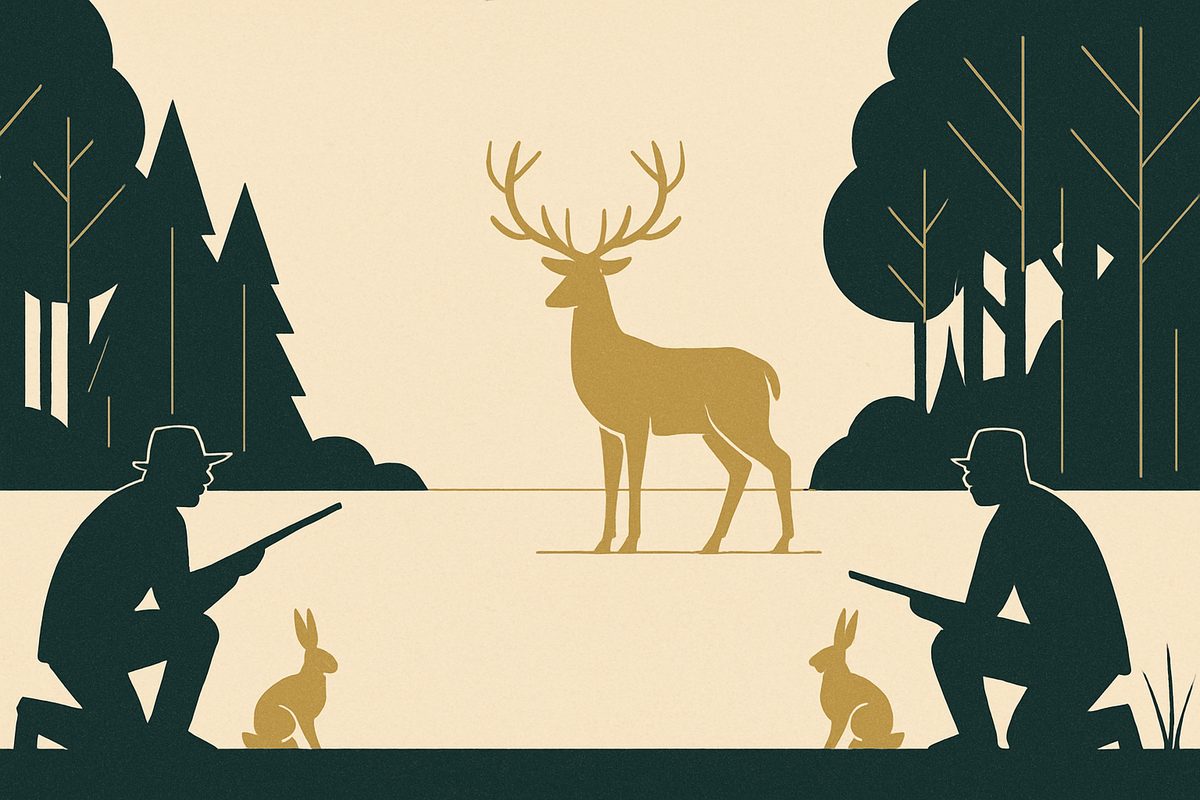
The Stag Hunt
Mutual cooperation is the best outcome for everyone, but it is risky — and the safe option is available unilaterally.
The critical difference from a prisoner's dilemma is that betrayal does not pay best: mutual cooperation is the highest cell. So the barrier is trust rather than temptation, which makes it dramatically more tractable — cheap, visible commitment is often enough. The unhappy equilibrium is nonetheless stable and can persist for generations, because the risk-dominant option is individually safe and being the only one who showed up is genuinely costly.
- How it feels
- Everybody agrees privately that the better outcome is better.
- The stated reason for not acting is 'nobody else will'.
- The safe option is available to each person individually.
- A single credible announcement changes the mood in the room.
- Who is playing
- Everyone who has to arrive at once — plus whoever could go first visibly at low cost. That last role is usually vacant, and filling it is the entire fix.
- Where it lands
- Everyone takes the safe small option, everyone continues to prefer the large one, and it reads from outside as apathy.
- What moves it
Cheap visible commitment: announce first, publish the intention, create a threshold pledge that only binds once enough others join. Assurance contracts exist for exactly this shape and work well, because they remove the risk of being the only one.
Not to be confused with
Nearly every misread in practice is a shape mistaken for its neighbour — and each of those mistakes points you at the wrong fix.
The Prisoner's Dilemma
If they cooperate, would you rather cooperate too, or betray? Preferring to cooperate makes it a stag hunt — trust, not temptation.
Public Goods and the Free Rider
Does the prize require everybody, or does it arrive whether or not you contributed? If it arrives anyway, you are in a free-rider problem instead.
Where you have already met it
Work and Careers
A team where everybody would raise the real problem if somebody else went first. The first person pays the whole cost.
Markets and Money
An industry where everyone would adopt the better standard if they were not the only one paying for it.
Faith and Community
A street that would all take the safer route home together. Alone, each person takes the quick one.
Politics and Voting
Reforms that most legislators privately support and none will introduce, because the first mover absorbs the whole attack.